Ingredients
Equipment
Method
Instructions
- Prepare the Batter Base: In a medium bowl, whisk together the two egg yolks, milk, vanilla extract, and optional lemon zest until smooth and slightly pale. In a separate small bowl, sift or whisk together the all-purpose flour and baking powder. Add the dry ingredients to the wet ingredients and whisk until just combined. Be careful not to overmix; a few small lumps are perfectly fine.
- Whip the Meringue: In a separate, scrupulously clean, large bowl, add the two egg whites and the white vinegar or lemon juice. Using an electric hand mixer or a stand mixer, beat on medium speed until the whites are foamy. Gradually add the granulated sugar, one tablespoon at a time, while continuing to beat. Once all the sugar is added, increase the speed to high and beat until stiff, glossy peaks form. This means when you lift the beaters, the peak holds its shape and doesn't flop over.
- Combine the Batter and Meringue: Take about one-third of the meringue and fold it into the egg yolk batter to lighten it up. Then, add the remaining meringue to the bowl. Gently fold everything together with a spatula, scraping from the bottom up, until just combined. You want to see very few streaks of white remaining, but be extremely careful not to deflate all the air you just whipped in.
- Cook the Pancakes: Heat your non-stick skillet over the lowest possible heat. Lightly grease the pan with a bit of neutral oil, wiping out any excess with a paper towel. Using an ice cream scoop or a large spoon, drop tall mounds of batter onto the pan, leaving plenty of space between them. Add about a tablespoon of water to the empty spaces in the pan (not on the pancakes). Immediately cover with the lid.
- Steam and Flip: Cook for about 4-6 minutes on the first side. The pancakes should have risen significantly and the top should look slightly set. Gently and quickly, slide a thin spatula underneath and flip them over. Add another tablespoon of water to the pan, cover again, and cook for another 3-4 minutes, until golden brown and cooked through.
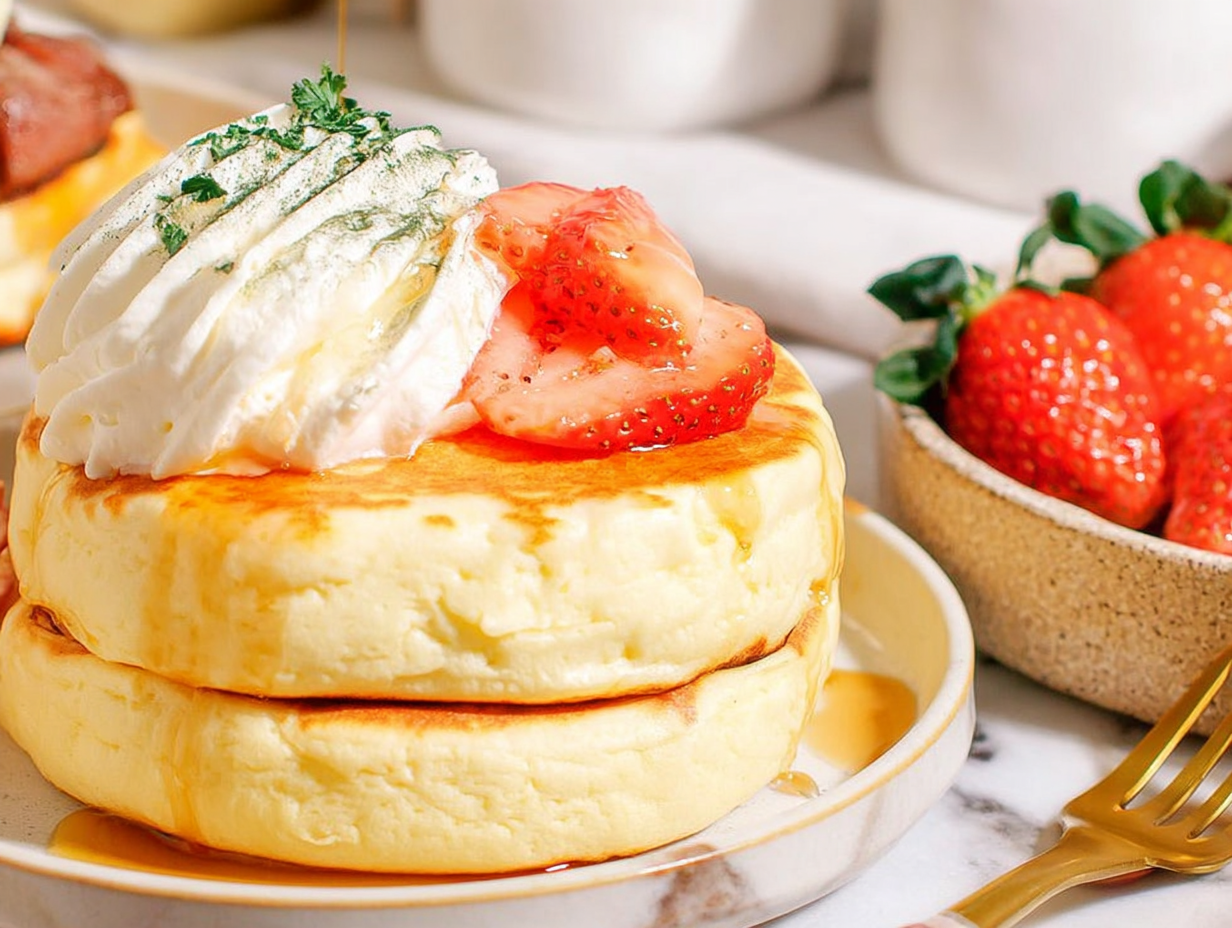
- Make Whipped Cream and Serve: While the pancakes cook, whip the cold heavy cream, sugar, and vanilla until soft peaks form. Serve the Japanese soufflé pancakes immediately, topped with your fresh whipped cream, berries, a dusting of powdered sugar, and a drizzle of maple syrup.
Notes
Ensure the bowl for the meringue is perfectly clean and free of grease; wipe with vinegar as a precaution. The meringue should be beaten to stiff, glossy peaks. Cook the pancakes on the lowest possible heat and use a lid to trap steam, which is crucial for height and even cooking. Flip confidently with two thin spatulas to avoid deflation.