
Fun Flavor Variations
- Matcha Pancakes: Sift 1 teaspoon of high-quality matcha powder in with the flour for a beautiful green tea flavor and color.
- Chocolate Pancakes: Sift 1 tablespoon of unsweetened cocoa powder in with the flour. You may want to add an extra teaspoon of sugar to the meringue to balance the bitterness.
- Almond Joy: Use almond extract instead of vanilla and top with chocolate syrup, toasted almonds, and shredded coconut.
Can I use different toppings?
Absolutely! The classic toppings are wonderful, but feel free to get creative. These pancakes are also delicious with a simple fruit compote, a drizzle of lemon curd, or even a scoop of ice cream for a more dessert-like treat. While they are best served hot, pairing them with a chilled fruit sauce can be a great option if you’re looking for cold breakfast ideas to complement the warm pancakes.
Japanese Soufflé Pancakes: Frequently Asked Questions
Why did my soufflé pancakes deflate?
This is the most common issue! There are a few likely culprits. The meringue might have been under-whipped and wasn’t stable enough, or the batter was overmixed when you combined the two parts, knocking all the air out. Another reason could be cooking temperature; if the pan is too hot, they cook too fast on the outside and the internal structure doesn’t have time to set, causing a collapse. And remember, they will always deflate a little after coming off the heat – that’s normal. We are looking to avoid a dramatic, instant collapse.
Can I make the batter in advance?
Unfortunately, no. This is a recipe that needs to be made and cooked right away. The air in the meringue is not stable and will begin to break down the longer it sits. If you let the batter rest, the meringue will deflate, and you’ll lose all the volume and airiness that makes these pancakes so special. For the best results, have your pan preheated and ready to go as soon as the batter is folded together.
What is the best pan to use?
A heavy-bottomed, non-stick skillet with a tight-fitting lid is your best friend for this recipe. The heavy bottom ensures even heat distribution, preventing hot spots that can burn the pancakes. The non-stick surface is crucial for an easy, clean flip without tearing the delicate structure. If you don’t have a non-stick pan, a well-seasoned cast-iron skillet can also work, but you’ll need to be very diligent with greasing it.
Conclusion
Making these Japanese soufflé pancakes is so much more than just mixing a batter; it’s a wonderfully mindful process that ends with a spectacular reward. There’s something incredibly satisfying about watching them puff up in the pan, knowing you created that airy texture with your own hands. They are a testament to how simple ingredients can be transformed into something truly extraordinary. This recipe is your ticket to creating a brunch that nobody will forget or simply treating yourself to a truly good breakfast. So take a slow morning, put on some music, and enjoy the magical process of making these cloud-like pancakes. I promise the effort is worth every single delicious, melt-in-your-mouth bite.
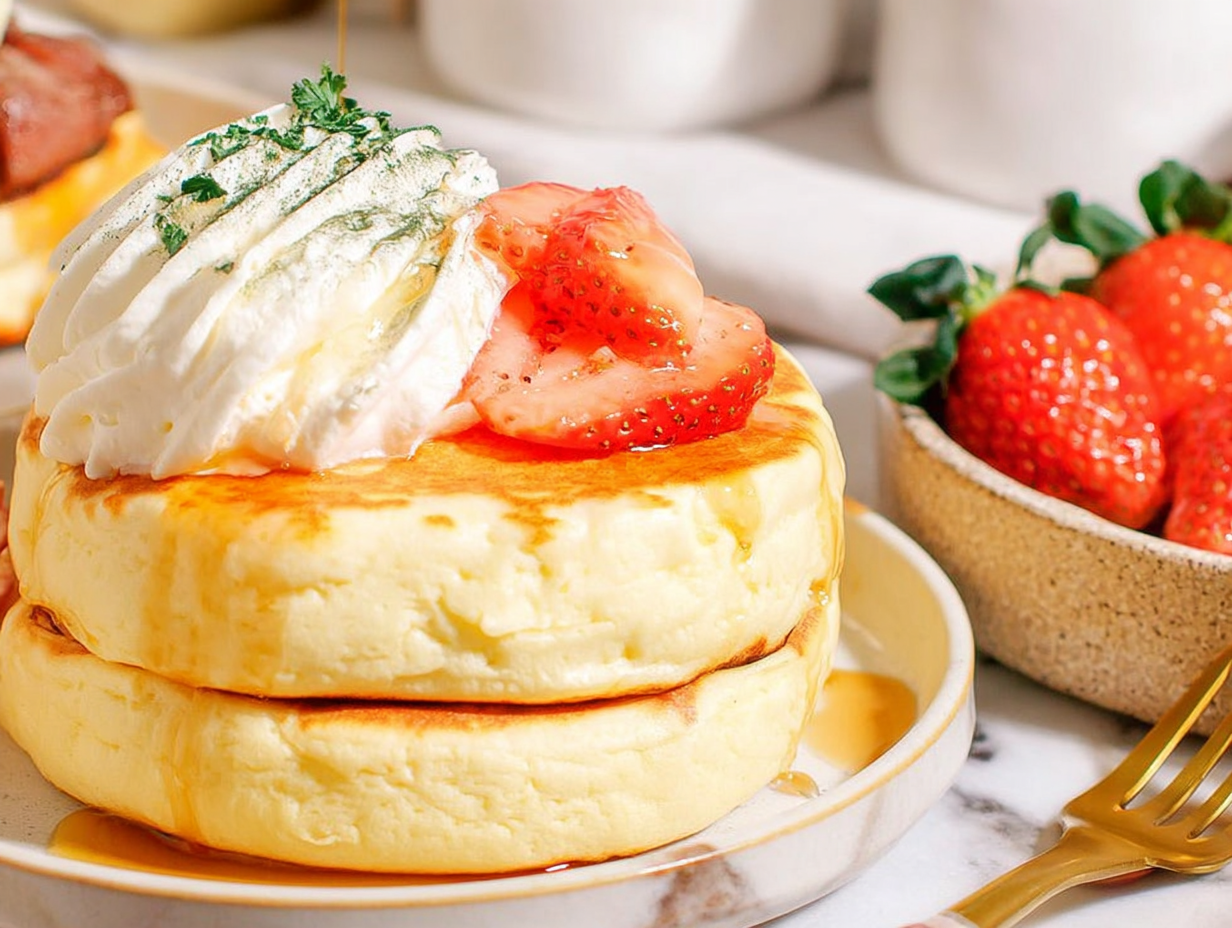
Japanese Soufflé Pancakes
Ingredients
Equipment
Method
- Prepare the Batter Base: In a medium bowl, whisk together the two egg yolks, milk, vanilla extract, and optional lemon zest until smooth and slightly pale. In a separate small bowl, sift or whisk together the all-purpose flour and baking powder. Add the dry ingredients to the wet ingredients and whisk until just combined. Be careful not to overmix; a few small lumps are perfectly fine.
- Whip the Meringue: In a separate, scrupulously clean, large bowl, add the two egg whites and the white vinegar or lemon juice. Using an electric hand mixer or a stand mixer, beat on medium speed until the whites are foamy. Gradually add the granulated sugar, one tablespoon at a time, while continuing to beat. Once all the sugar is added, increase the speed to high and beat until stiff, glossy peaks form. This means when you lift the beaters, the peak holds its shape and doesn’t flop over.
- Combine the Batter and Meringue: Take about one-third of the meringue and fold it into the egg yolk batter to lighten it up. Then, add the remaining meringue to the bowl. Gently fold everything together with a spatula, scraping from the bottom up, until just combined. You want to see very few streaks of white remaining, but be extremely careful not to deflate all the air you just whipped in.
- Cook the Pancakes: Heat your non-stick skillet over the lowest possible heat. Lightly grease the pan with a bit of neutral oil, wiping out any excess with a paper towel. Using an ice cream scoop or a large spoon, drop tall mounds of batter onto the pan, leaving plenty of space between them. Add about a tablespoon of water to the empty spaces in the pan (not on the pancakes). Immediately cover with the lid.
- Steam and Flip: Cook for about 4-6 minutes on the first side. The pancakes should have risen significantly and the top should look slightly set. Gently and quickly, slide a thin spatula underneath and flip them over. Add another tablespoon of water to the pan, cover again, and cook for another 3-4 minutes, until golden brown and cooked through.
- Make Whipped Cream and Serve: While the pancakes cook, whip the cold heavy cream, sugar, and vanilla until soft peaks form. Serve the Japanese soufflé pancakes immediately, topped with your fresh whipped cream, berries, a dusting of powdered sugar, and a drizzle of maple syrup.
Notes
The Low-and-Slow Cooking Method
You must resist the urge to turn up the heat! Cooking these pancakes requires patience and the lowest heat setting on your stove. If the heat is too high, the bottoms will burn long before the delicate, airy interior has a chance to set. The little splash of water you add to the pan before covering it is a crucial step. It creates steam, which cooks the pancakes gently from all sides and helps them puff up to their maximum height. You need a pan with a lid that fits well to trap that steam. If your lid has a vent hole, I recommend plugging it with a small piece of paper towel to keep all that precious steam inside.
How do you flip them without making a mess?
Flipping these delicate pancakes can be the most intimidating step. The key is confidence and the right tool. I recommend using two thin, wide spatulas. Slide one all the way under the pancake, and use the second one to support the side as you quickly and decisively turn it over. Don’t hesitate in the middle of the flip! A quick, smooth motion is best. They will deflate slightly upon flipping, which is completely normal, but a gentle hand will help preserve as much of that beautiful height as possible.
Substitutions & Variations
While the core recipe is quite specific, there’s still room to play around and make it your own. Once you have the basic technique down, you can start experimenting with different flavors and adapting it to your dietary needs. The batter is a wonderful canvas for subtle additions like spices or different extracts. The key is not to add anything too heavy that might weigh down the delicate meringue. Think powders and liquids rather than heavy, chunky additions. For example, a dash of cinnamon or cardamom in the flour can add a lovely warmth, perfect for a cozy morning. These small tweaks can transform the recipe and keep it exciting every time you make it, whether you’re aiming for a classic flavor or something entirely new.
Dietary Swaps
- Gluten-Free: You can substitute the all-purpose flour with a good quality 1-to-1 gluten-free baking blend. Look for one that contains xanthan gum.
- Dairy-Free: The milk can easily be swapped for any dairy-free alternative like almond, soy, or oat milk. For the topping, use a chilled can of full-fat coconut cream (just the solid part) to make a delicious dairy-free whipped cream.
Fun Flavor Variations
- Matcha Pancakes: Sift 1 teaspoon of high-quality matcha powder in with the flour for a beautiful green tea flavor and color.
- Chocolate Pancakes: Sift 1 tablespoon of unsweetened cocoa powder in with the flour. You may want to add an extra teaspoon of sugar to the meringue to balance the bitterness.
- Almond Joy: Use almond extract instead of vanilla and top with chocolate syrup, toasted almonds, and shredded coconut.
Can I use different toppings?
Absolutely! The classic toppings are wonderful, but feel free to get creative. These pancakes are also delicious with a simple fruit compote, a drizzle of lemon curd, or even a scoop of ice cream for a more dessert-like treat. While they are best served hot, pairing them with a chilled fruit sauce can be a great option if you’re looking for cold breakfast ideas to complement the warm pancakes.
Japanese Soufflé Pancakes: Frequently Asked Questions
Why did my soufflé pancakes deflate?
This is the most common issue! There are a few likely culprits. The meringue might have been under-whipped and wasn’t stable enough, or the batter was overmixed when you combined the two parts, knocking all the air out. Another reason could be cooking temperature; if the pan is too hot, they cook too fast on the outside and the internal structure doesn’t have time to set, causing a collapse. And remember, they will always deflate a little after coming off the heat – that’s normal. We are looking to avoid a dramatic, instant collapse.
Can I make the batter in advance?
Unfortunately, no. This is a recipe that needs to be made and cooked right away. The air in the meringue is not stable and will begin to break down the longer it sits. If you let the batter rest, the meringue will deflate, and you’ll lose all the volume and airiness that makes these pancakes so special. For the best results, have your pan preheated and ready to go as soon as the batter is folded together.
What is the best pan to use?
A heavy-bottomed, non-stick skillet with a tight-fitting lid is your best friend for this recipe. The heavy bottom ensures even heat distribution, preventing hot spots that can burn the pancakes. The non-stick surface is crucial for an easy, clean flip without tearing the delicate structure. If you don’t have a non-stick pan, a well-seasoned cast-iron skillet can also work, but you’ll need to be very diligent with greasing it.
Conclusion
Making these Japanese soufflé pancakes is so much more than just mixing a batter; it’s a wonderfully mindful process that ends with a spectacular reward. There’s something incredibly satisfying about watching them puff up in the pan, knowing you created that airy texture with your own hands. They are a testament to how simple ingredients can be transformed into something truly extraordinary. This recipe is your ticket to creating a brunch that nobody will forget or simply treating yourself to a truly good breakfast. So take a slow morning, put on some music, and enjoy the magical process of making these cloud-like pancakes. I promise the effort is worth every single delicious, melt-in-your-mouth bite.
There are certain recipes that feel less like cooking and more like magic. For me, this Japanese soufflé pancakes recipe is pure magic. I still remember the first time I saw them in a small cafe in Kyoto – these impossibly tall, wobbly stacks of pure, pillowy goodness. They weren’t like any pancake I’d ever had; they were ethereal, cloud-like, and tasted like a sweet, airy dream. I was convinced they were some culinary secret, far too complicated for a home cook. But after countless attempts, I discovered the secret isn’t about complex techniques, but about patience and understanding the batter. This recipe is the result of that journey, a way to bring that little piece of breakfast magic right into your own kitchen.
What makes these pancakes float off the plate is the soufflé method. We’ll be creating a beautiful, stable meringue from egg whites and folding it gently into a rich yolk-based batter. Don’t let the word “meringue” scare you! It’s a simple process that I’ll walk you through step-by-step. The result is a pancake that steams itself from the inside out, creating that iconic jiggly texture and incredible height. They turn a regular weekend morning into a special occasion, making for a truly good breakfast that feels both indulgent and wonderfully light. Forget dense, heavy pancakes; these are a whole new experience. They are perfect for a celebratory brunch, a slow Sunday morning, or even a delightful dessert that will have everyone asking for your secret.
Ingredients for Japanese Soufflé Pancakes
The beauty of this recipe lies in its simplicity. You don’t need a long list of fancy ingredients to create these showstoppers. The magic comes from how these everyday staples are treated. The most important thing is the eggs; they are the star and the entire foundation of the soufflé structure. For the best results, make sure your eggs are at room temperature. Cold egg whites are much harder to whip into a voluminous, stable meringue, which is the absolute key to getting that signature lift. I like to take my eggs out of the fridge about 30 minutes before I start. The rest of the ingredients are likely already in your pantry, waiting to be transformed into a memorable meal.
For the Soufflé Pancakes
- 2 large eggs, separated (use room temperature eggs)
- 2 tablespoons milk (whole milk is best)
- ½ teaspoon vanilla extract
- 1 teaspoon lemon zest (optional, but adds a lovely brightness)
- ¼ cup all-purpose flour
- ¼ teaspoon baking powder
- ½ teaspoon white vinegar or lemon juice (to stabilize the egg whites)
- 2 tablespoons granulated sugar
- Neutral oil for cooking (like canola or vegetable oil)
For the Sweetened Whipped Cream & Toppings
- ½ cup cold heavy cream
- 1 tablespoon granulated sugar
- ½ teaspoon vanilla extract
- Assorted berries
- Powdered sugar for dusting
- Maple syrup
Do the ingredients need to be exact?
Yes, for this recipe, precision is helpful. Baking is a science, and soufflé pancakes are a perfect example of that. The ratio of wet to dry ingredients and the balance between the egg yolk base and the meringue are carefully calibrated to produce the lightest, fluffiest result. The small amount of acid (vinegar or lemon juice) is chemically crucial for helping the egg whites whip up into strong, stable peaks that won’t collapse when you fold in the other ingredients. So, I highly recommend using measuring cups and spoons for the best outcome!
How to Make Japanese Soufflé Pancakes
Making these pancakes is a process of two parts: creating the flavorful base and whipping up the airy meringue. The real art is in combining them. Be patient with yourself, especially the first time. The key is to move gently and deliberately. Don’t rush the folding process, as that’s where you incorporate all the air that makes these pancakes rise. Before you start, get your pan ready. You need a large non-stick skillet with a tight-fitting lid. The lid is non-negotiable! It traps the steam that is essential for cooking the pancakes through and helping them climb to their impressive height. Think of it as creating a tiny steam oven on your stovetop. This method ensures you get a perfectly cooked, tender pancake instead of one that’s browned on the outside and raw in the middle. It’s the secret to a fantastic good breakfast experience.
- Prepare the Batter Base: In a medium bowl, whisk together the two egg yolks, milk, vanilla extract, and optional lemon zest until smooth and slightly pale. In a separate small bowl, sift or whisk together the all-purpose flour and baking powder. Add the dry ingredients to the wet ingredients and whisk until just combined. Be careful not to overmix; a few small lumps are perfectly fine.
- Whip the Meringue: In a separate, scrupulously clean, large bowl, add the two egg whites and the white vinegar or lemon juice. Using an electric hand mixer or a stand mixer, beat on medium speed until the whites are foamy. Gradually add the granulated sugar, one tablespoon at a time, while continuing to beat. Once all the sugar is added, increase the speed to high and beat until stiff, glossy peaks form. This means when you lift the beaters, the peak holds its shape and doesn’t flop over.
- Combine the Batter and Meringue: Take about one-third of the meringue and fold it into the egg yolk batter to lighten it up. Then, add the remaining meringue to the bowl. Gently fold everything together with a spatula, scraping from the bottom up, until just combined. You want to see very few streaks of white remaining, but be extremely careful not to deflate all the air you just whipped in.
- Cook the Pancakes: Heat your non-stick skillet over the lowest possible heat. Lightly grease the pan with a bit of neutral oil, wiping out any excess with a paper towel. Using an ice cream scoop or a large spoon, drop tall mounds of batter onto the pan, leaving plenty of space between them. Add about a tablespoon of water to the empty spaces in the pan (not on the pancakes). Immediately cover with the lid.
- Steam and Flip: Cook for about 4-6 minutes on the first side. The pancakes should have risen significantly and the top should look slightly set. Gently and quickly, slide a thin spatula underneath and flip them over. Add another tablespoon of water to the pan, cover again, and cook for another 3-4 minutes, until golden brown and cooked through.
- Make Whipped Cream and Serve: While the pancakes cook, whip the cold heavy cream, sugar, and vanilla until soft peaks form. Serve the Japanese soufflé pancakes immediately, topped with your fresh whipped cream, berries, a dusting of powdered sugar, and a drizzle of maple syrup.
Tips & Tricks for the Fluffiest Pancakes
After making dozens and dozens of batches, I’ve learned that a few small details make a huge difference between flat, sad pancakes and tall, jiggly ones. The first few times you make them, it can feel a little tricky, but these tips are my tried-and-true secrets for getting them right every single time. The biggest hurdle for most people is the meringue. If your bowl has any trace of grease or if even a tiny speck of egg yolk gets into your whites, they simply will not whip up properly. I always wipe my bowl and beaters with a bit of vinegar on a paper towel before I start, just to be sure they are perfectly clean. This little bit of insurance can save you a lot of frustration and is key to building that light, airy structure that defines these amazing pancakes.
Master the Meringue
The meringue isn’t just an ingredient; it’s the engine of the entire recipe. You are looking for stiff, glossy peaks. What does that mean? When you stop the mixer and lift the beaters, the peak that forms should stand up straight, with maybe a tiny curl at the very tip. If it’s soft and flops over immediately, you need to keep beating. If you under-beat, the meringue won’t be strong enough to hold its structure and your pancakes will be dense. If you over-beat it, it will become grainy and start to separate. The gradual addition of sugar is also important as it helps create a more stable, less weepy meringue. This strong foundation is what makes the final pancakes so incredibly light and is essential for a truly good breakfast.
The Low-and-Slow Cooking Method
You must resist the urge to turn up the heat! Cooking these pancakes requires patience and the lowest heat setting on your stove. If the heat is too high, the bottoms will burn long before the delicate, airy interior has a chance to set. The little splash of water you add to the pan before covering it is a crucial step. It creates steam, which cooks the pancakes gently from all sides and helps them puff up to their maximum height. You need a pan with a lid that fits well to trap that steam. If your lid has a vent hole, I recommend plugging it with a small piece of paper towel to keep all that precious steam inside.
How do you flip them without making a mess?
Flipping these delicate pancakes can be the most intimidating step. The key is confidence and the right tool. I recommend using two thin, wide spatulas. Slide one all the way under the pancake, and use the second one to support the side as you quickly and decisively turn it over. Don’t hesitate in the middle of the flip! A quick, smooth motion is best. They will deflate slightly upon flipping, which is completely normal, but a gentle hand will help preserve as much of that beautiful height as possible.
Substitutions & Variations
While the core recipe is quite specific, there’s still room to play around and make it your own. Once you have the basic technique down, you can start experimenting with different flavors and adapting it to your dietary needs. The batter is a wonderful canvas for subtle additions like spices or different extracts. The key is not to add anything too heavy that might weigh down the delicate meringue. Think powders and liquids rather than heavy, chunky additions. For example, a dash of cinnamon or cardamom in the flour can add a lovely warmth, perfect for a cozy morning. These small tweaks can transform the recipe and keep it exciting every time you make it, whether you’re aiming for a classic flavor or something entirely new.
Dietary Swaps
- Gluten-Free: You can substitute the all-purpose flour with a good quality 1-to-1 gluten-free baking blend. Look for one that contains xanthan gum.
- Dairy-Free: The milk can easily be swapped for any dairy-free alternative like almond, soy, or oat milk. For the topping, use a chilled can of full-fat coconut cream (just the solid part) to make a delicious dairy-free whipped cream.
Fun Flavor Variations
- Matcha Pancakes: Sift 1 teaspoon of high-quality matcha powder in with the flour for a beautiful green tea flavor and color.
- Chocolate Pancakes: Sift 1 tablespoon of unsweetened cocoa powder in with the flour. You may want to add an extra teaspoon of sugar to the meringue to balance the bitterness.
- Almond Joy: Use almond extract instead of vanilla and top with chocolate syrup, toasted almonds, and shredded coconut.
Can I use different toppings?
Absolutely! The classic toppings are wonderful, but feel free to get creative. These pancakes are also delicious with a simple fruit compote, a drizzle of lemon curd, or even a scoop of ice cream for a more dessert-like treat. While they are best served hot, pairing them with a chilled fruit sauce can be a great option if you’re looking for cold breakfast ideas to complement the warm pancakes.
Japanese Soufflé Pancakes: Frequently Asked Questions
Why did my soufflé pancakes deflate?
This is the most common issue! There are a few likely culprits. The meringue might have been under-whipped and wasn’t stable enough, or the batter was overmixed when you combined the two parts, knocking all the air out. Another reason could be cooking temperature; if the pan is too hot, they cook too fast on the outside and the internal structure doesn’t have time to set, causing a collapse. And remember, they will always deflate a little after coming off the heat – that’s normal. We are looking to avoid a dramatic, instant collapse.
Can I make the batter in advance?
Unfortunately, no. This is a recipe that needs to be made and cooked right away. The air in the meringue is not stable and will begin to break down the longer it sits. If you let the batter rest, the meringue will deflate, and you’ll lose all the volume and airiness that makes these pancakes so special. For the best results, have your pan preheated and ready to go as soon as the batter is folded together.
What is the best pan to use?
A heavy-bottomed, non-stick skillet with a tight-fitting lid is your best friend for this recipe. The heavy bottom ensures even heat distribution, preventing hot spots that can burn the pancakes. The non-stick surface is crucial for an easy, clean flip without tearing the delicate structure. If you don’t have a non-stick pan, a well-seasoned cast-iron skillet can also work, but you’ll need to be very diligent with greasing it.
Conclusion
Making these Japanese soufflé pancakes is so much more than just mixing a batter; it’s a wonderfully mindful process that ends with a spectacular reward. There’s something incredibly satisfying about watching them puff up in the pan, knowing you created that airy texture with your own hands. They are a testament to how simple ingredients can be transformed into something truly extraordinary. This recipe is your ticket to creating a brunch that nobody will forget or simply treating yourself to a truly good breakfast. So take a slow morning, put on some music, and enjoy the magical process of making these cloud-like pancakes. I promise the effort is worth every single delicious, melt-in-your-mouth bite.