
There are some recipes that just feel like a secret weapon in your back pocket. This Blueberry Glazed Salmon is mine. It’s the dish I turn to when I want something that looks and tastes incredibly elegant, but requires almost no real effort. It’s a meal that tastes like summer, with a sticky, sweet, and tangy glaze that caramelizes under the heat, creating the most beautiful, deep purple crust on the flaky, tender salmon. The first time I tried pairing blueberries with salmon, I was skeptical, but the pop of fruity acidity from the berries and the deep punch of balsamic vinegar cut through the richness of the fish in a way that was completely surprising and utterly delicious. It’s a perfect example of how a few simple, smart ingredients can create a truly memorable, healthy dinner.
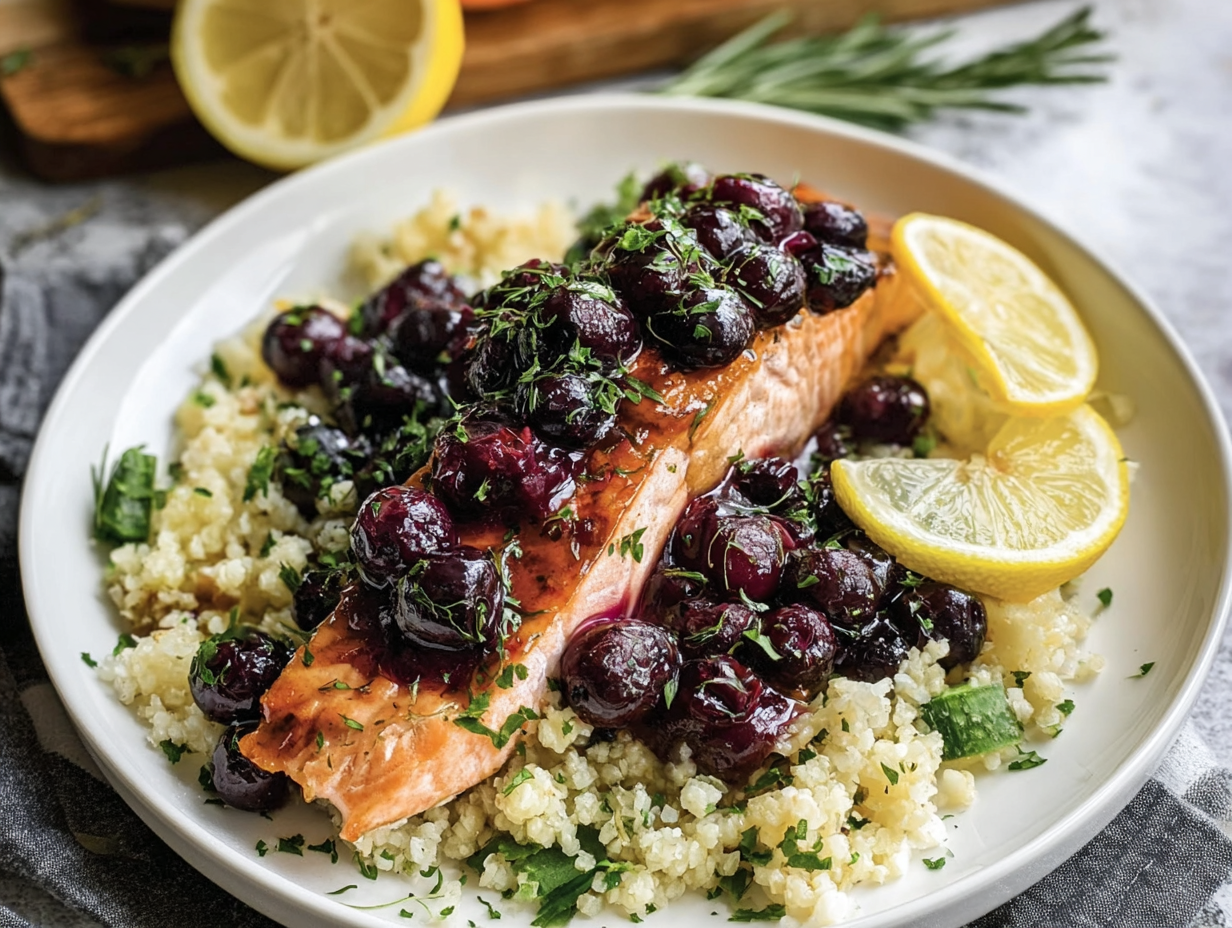
What I love most is the balance of the whole dish. The vibrant, jewel-toned salmon sits on a bed of fluffy, bright lemon herb couscous. The zesty citrus and fresh parsley in the couscous are the perfect, light counterpoint to the bold flavors of the glaze. It’s a complete meal on one plate that feels both wholesome and indulgent. This isn’t just another weeknight salmon recipe; it’s a celebration of flavor and color that’s simple enough for a Tuesday but special enough for a Saturday night dinner party. It’s proof that you don’t need complicated techniques to create a showstopper meal that will have everyone asking for the recipe.
Ingredients for Blueberry Glazed Salmon
This recipe relies on a short list of fresh, vibrant ingredients to create its magic. The star is the easy salmon glaze, a simple combination of blueberries, balsamic vinegar, a touch of sweetness, and mustard for depth. The couscous is just as straightforward, brightened with fresh lemon and herbs. It’s all about letting these quality components shine.
For the Blueberry Glaze & Salmon:
- Salmon Fillets: You’ll need 4 fillets, about 5 to 6 ounces each. You can use skin-on or skinless, whichever you prefer. Wild-caught salmon will have a deeper flavor, but farmed works beautifully too.
- Olive Oil: Just a teaspoon for searing the salmon.
- Salt & Black Pepper: To taste, for seasoning the fish.
- Blueberries: ¾ cup of fresh or frozen blueberries. If using frozen, there’s no need to thaw them first.
- Balsamic Vinegar: 2 tablespoons. This adds a crucial tangy depth that balances the sweetness.
- Honey or Maple Syrup: 1 tablespoon for that sticky, caramelized quality. Maple syrup is a great vegan alternative.
- Dijon Mustard: 1 teaspoon adds a subtle savory note that ties everything together.
- Lemon Zest: From half a lemon, to add a little brightness to the glaze.
For the Lemon Herb Couscous:
- Dry Couscous: 1 cup of standard Moroccan couscous.
- Boiling Water or Vegetable Broth: 1 cup. Using broth will infuse the couscous with more flavor from the start.
- Lemon: You’ll use the zest of 1 whole lemon and the juice of half of it.
- Olive Oil: 1 tablespoon of extra virgin olive oil for richness.
- Fresh Herbs: 2 tablespoons of chopped fresh parsley or basil. Dill or chives would also be wonderful.
- Salt & Pepper: To taste.
How to Make Blueberry Glazed Salmon Step-by-Step
The process for this Blueberry Glazed Salmon is surprisingly simple and comes together in about 30 minutes. We’ll start by making the quick stovetop glaze, then bake the salmon while the couscous steams. It’s an efficient workflow that makes this an ideal weeknight meal.
- Prepare the Blueberry Glaze: In a small saucepan, combine the blueberries, balsamic vinegar, honey (or maple syrup), Dijon mustard, and lemon zest. Bring the mixture to a simmer over medium heat. Let it cook for about 5-7 minutes, stirring occasionally and gently mashing some of the blueberries with the back of a spoon to release their juices. The glaze will thicken slightly. Once done, remove it from the heat and set aside.
- Prep and Season the Salmon: Preheat your oven to 400°F (200°C). Pat the salmon fillets completely dry with a paper towel—this is key for getting a nice finish. Rub them with olive oil and season generously on all sides with salt and black pepper. Place the fillets on a baking sheet lined with parchment paper for easy cleanup.
- Glaze and Bake the Salmon: Spoon the blueberry glaze generously over the top of each salmon fillet, making sure to cover the surface completely. Place the baking sheet in the preheated oven and bake for 12-15 minutes. The exact time will depend on the thickness of your fillets. The salmon is done when it flakes easily with a fork.
- Make the Lemon Herb Couscous: While the salmon is baking, prepare the couscous. Place the dry couscous in a heatproof bowl. Pour the boiling water or broth over it, add the lemon zest, lemon juice, olive oil, salt, and pepper. Stir once, then cover the bowl tightly with a lid or plastic wrap. Let it stand for 5-10 minutes, until all the liquid has been absorbed.
- Fluff and Serve: Once the couscous has absorbed the liquid, fluff it up with a fork. Stir in the chopped fresh parsley or basil. Serve the warm Blueberry Glazed Salmon immediately over a bed of the lemon herb couscous.
Tips & Tricks for the Best Salmon Dinner
Even a simple recipe can benefit from a few insider tips. These small details can make a big difference in the final texture of your salmon and the flavor of the entire dish. From achieving the perfect glaze to ensuring your couscous is fluffy every time, here are some tricks I’ve learned from making this Blueberry Glazed Salmon countless times.
Getting the Glaze Just Right
The heart of this recipe is the easy salmon glaze. The key is to not over-reduce it on the stove. You want it to be slightly thickened, but still pourable. It will continue to thicken and caramelize in the oven. As you simmer it, mashing about half of the blueberries helps create a thicker, jammier consistency while leaving some whole for texture. If your glaze gets too thick, you can always stir in a teaspoon of water or more balsamic vinegar to loosen it before spooning it over the salmon.
How to Avoid Overcooking Salmon
The number one mistake people make with salmon is overcooking it. A perfectly cooked fillet should be moist and tender, not dry and chalky. The best way to check for doneness is to use a fork to gently press on the thickest part of the fillet. If it begins to flake easily, it’s ready. Remember that the fish will continue to cook for a minute or two from residual heat after you pull it from the oven, so it’s better to err on the side of slightly undercooked. For a 1-inch thick fillet, 12-15 minutes at 400°F is usually perfect.
FAQ: Why is my couscous clumpy instead of fluffy?
Clumpy couscous is usually the result of too much stirring or the wrong liquid-to-grain ratio. The 1:1 ratio of couscous to boiling liquid is crucial. When you add the liquid, give it one quick stir to combine everything, then cover it and walk away. Don’t touch it again until the liquid is fully absorbed. Over-stirring while it’s hydrating can release starches and make it gummy. The final, most important step is fluffing it with a fork—not a spoon—which separates the grains perfectly.
Substitutions and Variations
This Blueberry Glazed Salmon recipe is fantastic as is, but it’s also incredibly flexible. Whether you have dietary restrictions or just want to experiment with different flavors, there are plenty of easy swaps you can make. Here are a few of my favorite variations to make the dish your own.
Ingredient Swaps
- For the Salmon: This glaze works wonderfully with other sturdy fish like Arctic char, steelhead trout, or even cod. If you’re not a fan of fish, it’s also delicious on pork tenderloin or chicken breasts (adjust baking time accordingly).
- For the Sweetener: Instead of honey or maple syrup, you could use agave nectar or brown sugar in the glaze.
- For the Herbs: Don’t have parsley or basil? Fresh dill, chives, or mint would all be excellent in the couscous for a different flavor profile.
- For the Couscous: If you need a gluten-free option, quinoa is a fantastic substitute. Just cook it according to package directions and then stir in the lemon, oil, and herbs at the end. Orzo pasta or farro would also work well.
Flavor Variations
- Add Some Spice: For a little kick, add a pinch of red pepper flakes or a dash of hot sauce to the blueberry glaze as it simmers.
- Make it Creamy: Crumble some feta or goat cheese into the couscous just before serving for a creamy, tangy addition.
- Add a Crunch: Toasted slivered almonds or chopped pecans sprinkled over the finished dish add a lovely textural contrast.
Frequently Asked Questions
Can I use frozen salmon for this recipe?
Absolutely! Frozen salmon is a great, convenient option. Just be sure to thaw it completely before you begin. The best way is to let it thaw overnight in the refrigerator. If you’re short on time, you can place the vacuum-sealed fillets in a bowl of cold water for about 30-60 minutes. Before seasoning, pat the thawed fillets very dry with paper towels to remove any excess moisture.
Can I make the blueberry glaze ahead of time?
Yes, the glaze can be made up to 3 days in advance. Prepare it as directed, let it cool completely, and then store it in an airtight container in the refrigerator. It might thicken a bit when chilled, so you may want to let it sit at room temperature for 20 minutes or gently warm it before spooning it over the salmon.
What should I serve with Blueberry Glazed Salmon?
While the lemon herb couscous makes this a complete meal, it also pairs beautifully with other sides. Roasted asparagus, a simple green salad with a vinaigrette, steamed green beans, or sautéed spinach would all be wonderful accompaniments that complement the rich flavors of the salmon.
Conclusion
This Blueberry Glazed Salmon is more than just a recipe; it’s a perfect blend of simplicity and elegance that proves a stunning, healthy dinner doesn’t have to be complicated. The tangy, sweet glaze and the bright, fluffy couscous create a restaurant-quality meal right in your own kitchen. It’s a dish that’s both comforting and a little bit surprising, and I hope it becomes a favorite for you, too. Give it a try, and enjoy the incredible flavors that come from just a handful of simple ingredients.
Blueberry Glazed Salmon
Ingredients
Equipment
Method
- Prepare the Blueberry Glaze: In a small saucepan, combine the blueberries, balsamic vinegar, honey (or maple syrup), Dijon mustard, and lemon zest. Bring the mixture to a simmer over medium heat. Let it cook for about 5-7 minutes, stirring occasionally and gently mashing some of the blueberries with the back of a spoon to release their juices. The glaze will thicken slightly. Once done, remove it from the heat and set aside.
- Prep and Season the Salmon: Preheat your oven to 400°F (200°C). Pat the salmon fillets completely dry with a paper towel—this is key for getting a nice finish. Rub them with olive oil and season generously on all sides with salt and black pepper. Place the fillets on a baking sheet lined with parchment paper for easy cleanup.
- Glaze and Bake the Salmon: Spoon the blueberry glaze generously over the top of each salmon fillet, making sure to cover the surface completely. Place the baking sheet in the preheated oven and bake for 12-15 minutes. The exact time will depend on the thickness of your fillets. The salmon is done when it flakes easily with a fork.
- Make the Lemon Herb Couscous: While the salmon is baking, prepare the couscous. Place the dry couscous in a heatproof bowl. Pour the boiling water or broth over it, add the lemon zest, lemon juice, olive oil, salt, and pepper. Stir once, then cover the bowl tightly with a lid or plastic wrap. Let it stand for 5-10 minutes, until all the liquid has been absorbed.
- Fluff and Serve: Once the couscous has absorbed the liquid, fluff it up with a fork. Stir in the chopped fresh parsley or basil. Serve the warm Blueberry Glazed Salmon immediately over a bed of the lemon herb couscous.