
There’s a special kind of magic that happens when you decide to recreate your favorite takeout dish at home. For me, that dish has always been Cantonese Chow Mein. I can almost smell the sizzling wok and hear the crackle of crispy noodles just thinking about it. This recipe is my love letter to those late-night cravings and the joy of discovering that you can make something even better right in your own kitchen. It’s more than just a meal; it’s about capturing that perfect, satisfying texture of noodles that are simultaneously soft and wonderfully crispy, all coated in a sauce that hits every single note of savory, sweet, and umami. This is the ultimate guide to making truly spectacular **Homemade Chinese Takeout**.
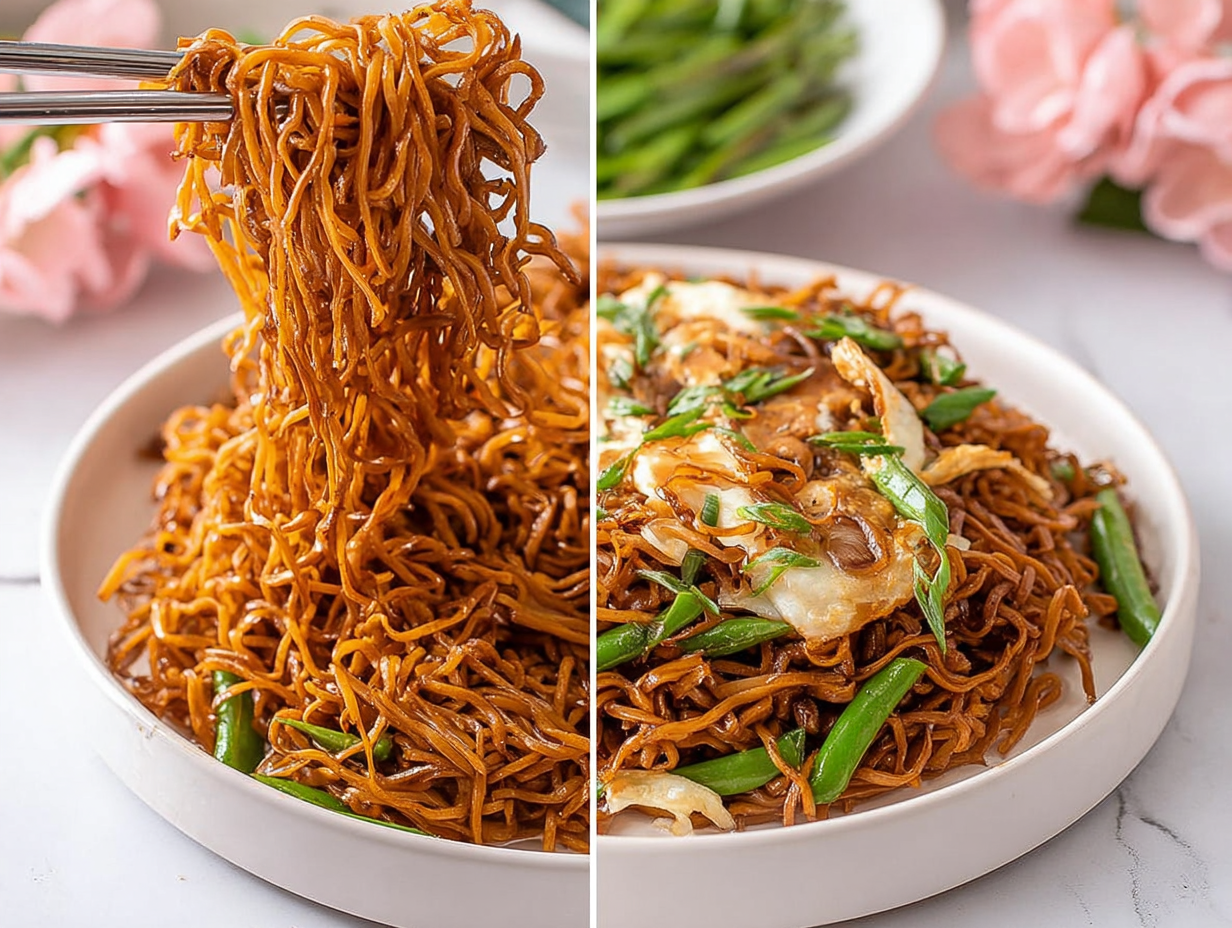
What makes this Cantonese Chow Mein recipe stand out is its simplicity and speed. We’re talking under 15 minutes from pantry to plate, which is faster than any delivery app. The key is in the technique: creating a “noodle pancake” that gets beautifully golden and crisp on the outside while staying tender inside. The sauce is a simple but powerful combination of soy sauces, oyster sauce, and a hint of sugar that perfectly complements the fresh, crunchy bean sprouts and onions. Whether you’re looking for new **Chinese Meal Ideas** or just want to master one of the classic **Chinese Style Noodles** dishes, this recipe is a guaranteed winner. It’s a versatile dish that feels special enough for a weekend but is easy enough for a hectic weeknight.
Ingredients for Cantonese Chow Mein
- 12 oz chow mein egg noodles (thin fresh noodles, often labeled Hong-Kong style)
- 1/2 small yellow onion, thinly sliced
- 5 stalks green onions, cut into 2-inch pieces (keep the white and green parts separate)
- 2 cups fresh bean sprouts
- 3 tablespoons corn oil (or other neutral oil, divided)
- 1 teaspoon sesame oil (for finishing)
- 2 tablespoons dark soy sauce
- 1 tablespoon regular soy sauce
- 1 tablespoon oyster sauce
- 1/2 teaspoon fish sauce
- 1 tablespoon granulated sugar
- 1 tablespoon water
How to Make Step-by-Step Cantonese Chow Mein
- Prepare the Noodles: The first step is crucial for getting the right texture. Place your fresh chow mein noodles in a colander or bowl. Pour boiling water over them, just enough to cover. Let them sit for about 30 to 60 seconds, gently separating the strands with chopsticks or a fork. You just want to soften them, not fully cook them. Drain them immediately and thoroughly. Let them air dry for a few minutes while you proceed.
- Mix the Sauce: In a small bowl, combine the dark soy sauce, regular soy sauce, oyster sauce, fish sauce, granulated sugar, and water. Whisk everything together until the sugar is completely dissolved. This sauce is the heart of the dish, so give it a good mix. Set it aside for later.
- Sauté the Aromatics: Place a wok or a large, heavy-bottomed skillet over medium-high heat. Add one tablespoon of the corn oil and let it get hot until it shimmers. Add the sliced yellow onion and the white parts of the green onions. Sauté for about one minute, stirring frequently, until they are fragrant and slightly softened. Remove them from the wok and set them aside on a plate.
- Pan-Fry the Noodles: This is where the magic happens. Return the wok to medium-high heat and add another tablespoon of corn oil. Once hot, add the drained noodles and use a spatula to spread them out into a thin, even layer, like a pancake. Let them cook, undisturbed, for about 2-3 minutes. You want to hear a sizzle! This creates that amazing crispy bottom. Flip the noodle pancake over, add the final tablespoon of oil around the edges of the wok, and cook for another 2-3 minutes until the other side is also golden and crisp.
- Combine Everything: Now it’s time to bring your **Stir Fry Chow Mein** together. Add the cooked onions and the green parts of the green onions back into the wok with the noodles. Scatter the bean sprouts on top. Pour the prepared sauce all over everything. Using tongs or two spatulas, gently toss and mix everything for 1-2 minutes until the noodles are coated and the bean sprouts are just tender-crisp.
- Finishing Touches: Remove the wok from the heat. Drizzle the sesame oil over the top and give it one final, gentle toss to combine. The residual heat will bloom the sesame aroma beautifully. Serve immediately while the noodles are at their crispiest.
Tips for the Perfect Stir Fry Chow Mein
Making great Cantonese chow mein at home is all about nailing the texture of the noodles. It’s the defining feature of the dish and what separates it from other noodle stir-fries. The goal is a delightful contrast between the crispy, golden-brown exterior and the soft, chewy interior of the noodle pancake. This doesn’t happen by accident; it requires a few key techniques. Getting this right will transform your dish from a simple stir-fry into one of those truly memorable **Saucy Meals** that you’ll be proud to have made yourself. It’s a simple process, but paying attention to the details is what makes it one of the best **Easy Healthy Noodle Recipes** you can master.
Getting That Perfect Noodle Crispiness
The absolute key to crispy noodles is ensuring they are as dry as possible before they hit the hot oil. After you briefly soak and drain them, let them sit in the colander for a few minutes to let any excess water evaporate. Patting them gently with a paper towel can also help. Wet noodles will steam in the wok instead of frying, which leads to a soft, sometimes mushy result. The second part of the equation is a hot wok and enough oil. Don’t be shy with the heat or the oil. You need that high temperature to create a rapid sizzle that fries the outside of the noodle pancake quickly, sealing it and creating that irresistible golden-brown crust. Finally, resist the urge to stir constantly. Let the noodles sit undisturbed for a full 2-3 minutes per side to allow the crust to form properly.
Why did my noodles get soggy?
This is a common issue, and it usually comes down to one of three things: over-soaking the noodles, not using a hot enough pan, or adding the sauce too early. The initial soak is just to loosen the fresh noodles, not to cook them through. Thirty to sixty seconds is plenty. If they sit in hot water for too long, they’ll absorb too much moisture. When it’s time to fry, if your pan isn’t hot enough, the noodles will slowly absorb the oil instead of crisping in it. Finally, the sauce should be one of the very last things you add. Tossing the noodles in the sauce for just a minute or two at the end ensures they get fully coated without having time to sit and absorb all the liquid, which would soften that beautiful crust you worked so hard to create.
Substitutions & Variations
While this classic version is a fantastic **No Meat Food Recipe**, its beauty lies in its versatility. It serves as a perfect base for all sorts of additions and modifications, making it one of those **Different Supper Ideas** you can return to again and again without getting bored. Think of this recipe as a template for your own creativity. You can easily add protein, switch up the vegetables, or adjust the sauce to match your personal taste or whatever you happen to have in the fridge. This adaptability is what makes it a staple in my home, perfect for cleaning out the crisper drawer at the end of the week.
Adding Protein and More Vegetables
If you want to make this a heartier meal, adding a protein is a great option. Thinly sliced chicken, beef, or peeled shrimp would all be delicious. Simply stir-fry the protein in the wok after you sauté the onions, cook it through, and set it aside. Add it back in at the end when you add the vegetables and sauce. For a vegetarian protein boost, firm or extra-firm tofu is an excellent choice. Press it well to remove excess water, cut it into cubes, and pan-fry until golden before you start the rest of the recipe. You can also bulk up the dish with more vegetables like sliced mushrooms, carrots, bok choy, or bell peppers. Just be sure to add the harder vegetables along with the onions to give them enough time to cook.
Ingredient Swaps
Don’t have everything on the list? No problem.
- Noodles: If you can’t find fresh Hong Kong-style noodles, you can use dried thin egg noodles. Just cook them according to package directions until al dente, then drain, rinse with cold water, and make sure they are very dry before frying.
- Sauce: For a gluten-free version, substitute tamari for the soy sauces and use a gluten-free oyster sauce. If you don’t have fish sauce, you can omit it, though it adds a wonderful depth of flavor. For a bit of heat, a teaspoon of chili garlic sauce or sriracha in the sauce works wonders.
Cantonese Chow Mein: Frequently Asked Questions
What is the difference between Cantonese chow mein and regular chow mein?
The main difference lies in the preparation of the noodles. In Cantonese-style chow mein, the fresh egg noodles are pan-fried into a crispy pancake that serves as a base. The sauce and toppings are then added, slightly softening the noodles while the edges remain delightfully crisp. Other styles of chow mein often involve stir-frying softer, fully cooked noodles directly with the other ingredients, resulting in a dish where all the components are mixed together with a consistently soft texture.
Can I make this dish ahead of time?
This dish is definitely best enjoyed immediately after cooking to appreciate the crispy texture of the noodles. The crispiness is the star of the show, and it will soften upon sitting. However, you can absolutely do some prep ahead of time to make assembly even faster. The sauce can be mixed and stored in the fridge for up to a week, and all the vegetables can be chopped and ready to go. When you’re ready to eat, the cooking process will only take about 10 minutes.
How do I store and reheat leftovers?
Store any leftovers in an airtight container in the refrigerator for up to 3 days. While the noodles won’t be as crispy as when they were fresh, you can revive them a bit. The best way to reheat is in a wok or skillet over medium-high heat with a tiny bit of oil. Spreading the noodles out and letting them heat for a few minutes can help bring back some of their original texture. Microwaving will work in a pinch, but the noodles will be soft.
The Joy of Homemade Cantonese Chow Mein
There is something so deeply satisfying about sliding that perfectly crispy, savory pile of noodles from the wok onto a plate. Every time I make this Cantonese Chow Mein, I’m reminded that the best meals don’t have to be complicated. With just a handful of ingredients and less than 15 minutes, you can create a dish that rivals, and honestly, surpasses any version you could order. It’s a recipe that’s as fun to make as it is to eat. I hope you give this **Homemade Chinese Takeout** classic a try and discover the joy of making incredible **Noodle Dishes Asian** style in your own kitchen. It’s a keeper!
Cantonese Chow Mein
Ingredients
Equipment
Method
- Prepare the Noodles: The first step is crucial for getting the right texture. Place your fresh chow mein noodles in a colander or bowl. Pour boiling water over them, just enough to cover. Let them sit for about 30 to 60 seconds, gently separating the strands with chopsticks or a fork. You just want to soften them, not fully cook them. Drain them immediately and thoroughly. Let them air dry for a few minutes while you proceed.
- Mix the Sauce: In a small bowl, combine the dark soy sauce, regular soy sauce, oyster sauce, fish sauce, granulated sugar, and water. Whisk everything together until the sugar is completely dissolved. This sauce is the heart of the dish, so give it a good mix. Set it aside for later.
- Sauté the Aromatics: Place a wok or a large, heavy-bottomed skillet over medium-high heat. Add one tablespoon of the corn oil and let it get hot until it shimmers. Add the sliced yellow onion and the white parts of the green onions. Sauté for about one minute, stirring frequently, until they are fragrant and slightly softened. Remove them from the wok and set them aside on a plate.
- Pan-Fry the Noodles: This is where the magic happens. Return the wok to medium-high heat and add another tablespoon of corn oil. Once hot, add the drained noodles and use a spatula to spread them out into a thin, even layer, like a pancake. Let them cook, undisturbed, for about 2-3 minutes. You want to hear a sizzle! This creates that amazing crispy bottom. Flip the noodle pancake over, add the final tablespoon of oil around the edges of the wok, and cook for another 2-3 minutes until the other side is also golden and crisp.
- Combine Everything: Now it’s time to bring your Stir Fry Chow Mein together. Add the cooked onions and the green parts of the green onions back into the wok with the noodles. Scatter the bean sprouts on top. Pour the prepared sauce all over everything. Using tongs or two spatulas, gently toss and mix everything for 1-2 minutes until the noodles are coated and the bean sprouts are just tender-crisp.
- Finishing Touches: Remove the wok from the heat. Drizzle the sesame oil over the top and give it one final, gentle toss to combine. The residual heat will bloom the sesame aroma beautifully. Serve immediately while the noodles are at their crispiest.