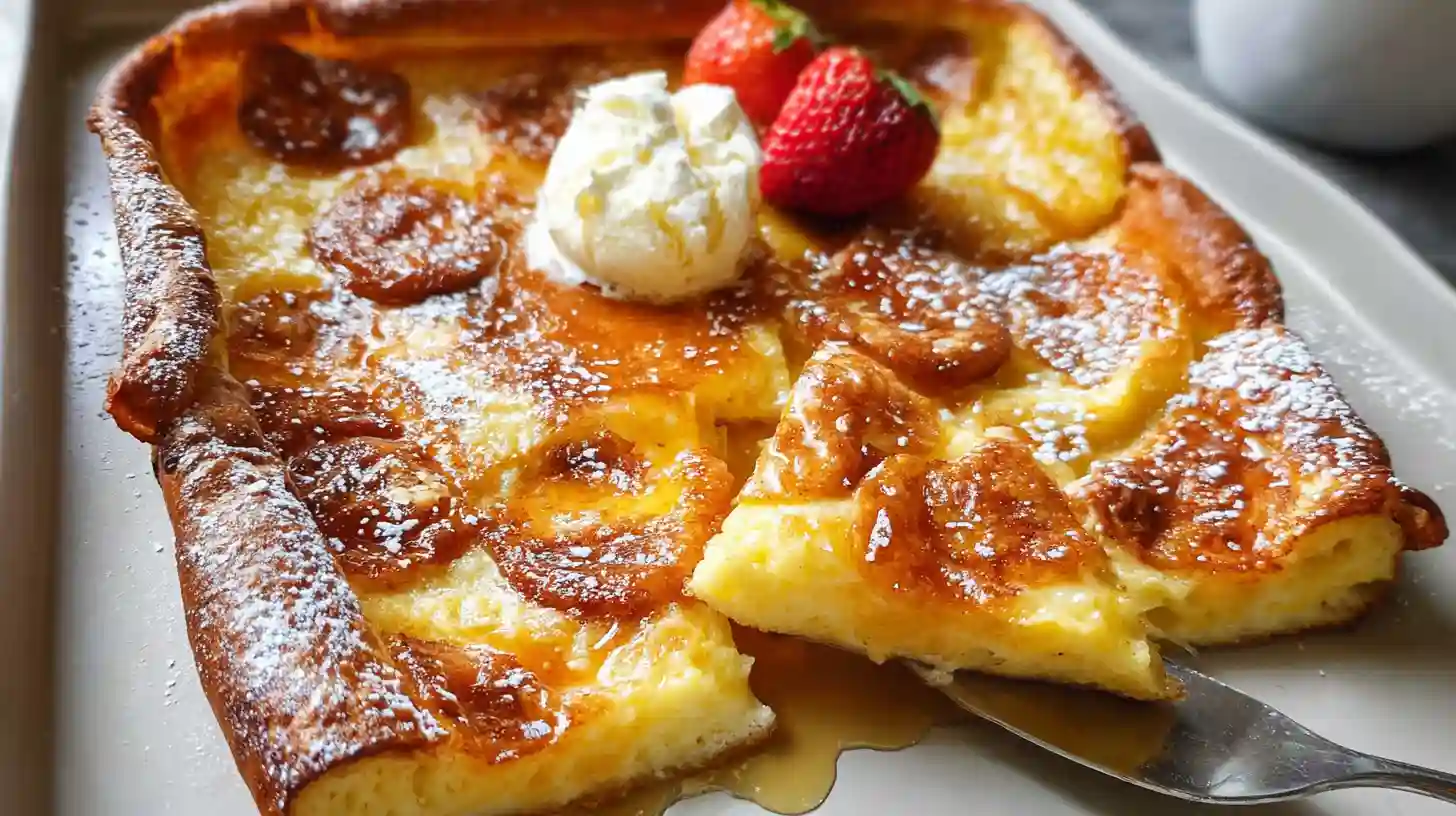
There is something quietly magical about pulling a Baked German Pancake from the oven. The kitchen smells like butter and vanilla, the edges are puffed and golden, and for a moment everyone actually pauses and just stares. This is the kind of breakfast that makes a slow Sunday morning feel a little special, without asking you to stand over the stove flipping pancakes one by one.
The beauty of a Baked German Pancake is how simple the batter is compared to how impressive the result looks on the table. You whisk a handful of pantry ingredients, pour the thin batter into a hot buttery pan, and the oven does the rest. It’s light yet satisfying, with a custardy center, crisp edges, and plenty of room for toppings like berries, powdered sugar, or a drizzle of maple syrup.
What is a Baked German Pancake?
A Baked German Pancake, sometimes called a Dutch baby, is an oven-baked pancake made from a simple egg-rich batter that puffs dramatically as it bakes. Instead of individual pancakes, you get one big skillet-sized pancake you slice into wedges like a pie. The texture lands somewhere between crepe and popover: soft and custardy in the middle, with slightly crisp, airy edges.
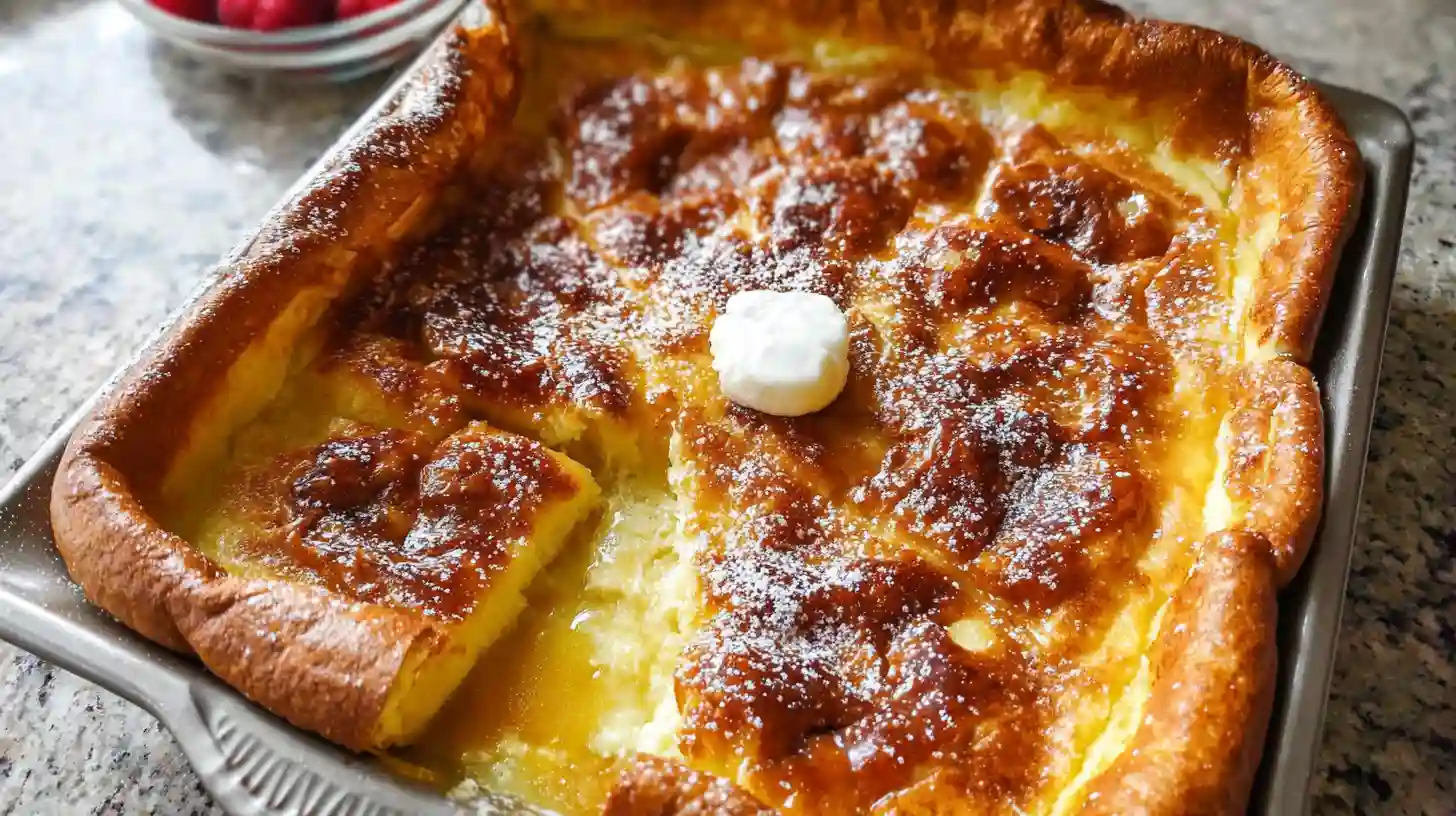
This version is baked in a rectangular dish so it feeds a small crowd without fuss, perfect for family breakfasts or brunch with friends. Serve it straight from the pan at the table so everyone can choose their own toppings. That mix of golden edges, buttery flavor, and billowy center is what makes a Baked German Pancake such a crowd-pleaser.
Ingredients you’ll need
The ingredients are humble and familiar, which is part of the charm of this Baked German Pancake. You likely have everything on hand already.
- Eggs – The backbone of the batter, giving height, structure, and that custard-like bite.
- Milk – Helps create a pourable batter and keeps the texture tender.
- All-purpose flour – Brings just enough body so the pancake puffs but doesn’t turn dense.
- Salt – A small pinch that keeps the flavor from tasting flat.
- Vanilla extract – Adds gentle warmth and bakery-style aroma.
- Unsalted butter – Melts in the baking dish to keep the pancake from sticking and adds rich flavor.
- Optional toppings – Powdered sugar, maple syrup, fresh berries, sliced fruit, or a squeeze of lemon.
How to make a Baked German Pancake
The basic method for this Baked German Pancake is straightforward, but a few small details help it rise tall and bake evenly.
- Preheat the oven to a hot temperature so the batter hits high heat right away.
- Add butter to your baking dish and slide it into the oven to melt and sizzle.
- Blend or whisk the eggs, milk, flour, salt, and vanilla until the batter is completely smooth.
- Carefully pull the hot pan from the oven and pour the batter over the melted butter.
- Return the dish to the oven and bake until the pancake is puffed, deep golden on the edges, and set in the middle.
- Dust with powdered sugar or finish with your favorite toppings and slice into squares or wedges to serve.

Pro tips for best results
A Baked German Pancake is forgiving, but a few practical tips help it bake up tall and evenly browned.
- Use room-temperature eggs and milk if you can; cold ingredients can slow down the rise.
- Let the batter rest for a few minutes to relax any bubbles and hydrate the flour.
- Make sure the butter is hot and slightly sizzling before you pour in the batter.
- Do not open the oven door in the first 15 minutes of baking or you may lose some of that dramatic puff.
- Serve right away; the pancake naturally deflates as it cools, which is completely normal.
Delicious variations to try
Once you are comfortable with the basic Baked German Pancake, it becomes a canvas for different flavors. You can keep it classic, or build in subtle twists that suit the season.
- Cinnamon sugar: Sprinkle the batter with a light dusting of cinnamon sugar before baking for a cozy, slightly caramelized top.
- Lemon and berry: Serve with a squeeze of fresh lemon juice and a handful of mixed berries for brightness.
- Apple version: Scatter thinly sliced apples in the hot buttered pan before adding the batter for a gentle apple pie vibe.
- Nutty twist: Add a spoonful of toasted sliced almonds or chopped hazelnuts on top just before serving.
- Chocolate lovers: Shower warm slices with mini chocolate chips and a drizzle of warm cream or chocolate sauce.
Troubleshooting common issues
If your Baked German Pancake does not look exactly like you imagined, a few small adjustments usually fix it next time. This style of pancake is naturally a little unpredictable, which is part of the fun.
- Pancake did not puff: The oven may not have been hot enough, or the pan and butter were not fully heated before adding the batter.
- Texture feels dense: Overmixing or adding too much flour can make the pancake heavy; mix until just smooth and measure the flour carefully.
- Center is too soft: Give it a few more minutes in the oven until the middle looks set and only slightly jiggly.
- Edges browned too quickly: Move the pan to a lower rack or tent loosely with foil near the end of baking.
Substitutions you can use
This Baked German Pancake is flexible enough to handle a few ingredient swaps if needed. Use what you have while keeping the basic ratios similar.
- Milk: Use whole milk for the richest result, but low-fat or your favorite unsweetened dairy alternative will still work.
- Flour: All-purpose flour is standard, though a light 1:1 gluten-free baking blend can be used if labeled suitable for baking.
- Butter: Salted butter can stand in for unsalted; simply reduce or skip extra salt in the batter.
- Sweetness: For a lightly sweet batter, add a spoonful of sugar or honey without changing the texture much.
How to store and serve
Like most oven pancakes, a Baked German Pancake tastes best fresh from the oven when the edges are still crisp. That said, leftovers can absolutely be saved and enjoyed later.
- Refrigeration: Cool any remaining pieces, then store them tightly covered in the refrigerator for up to 2 days.
- Reheating: Warm slices in a low oven or toaster oven until heated through; the texture will be softer but still tasty.
- Serving ideas: Add yogurt and fruit for a quick weekday breakfast, or enjoy cold with a little jam in the afternoon.
FAQs about Baked German Pancake
Can I make the batter ahead of time?
The batter can be mixed and kept in the refrigerator for a few hours, then whisked briefly before pouring into the hot, buttered pan.
Why did my pancake collapse after baking?
A Baked German Pancake always deflates somewhat as it cools because the steam escapes; the dramatic puff is meant for the oven window, not long-term height.
Do I need a blender to make the batter?
A blender makes the batter very smooth, but vigorous whisking in a bowl works as well as long as you combine the ingredients until no flour lumps remain.
Can I make a smaller batch?
Yes, you can halve the ingredients and bake in a smaller pan or oven-safe skillet, just keep an eye on the baking time since a thinner pancake bakes faster.
What toppings go best with a German pancake?
Powdered sugar and maple syrup are classic, but lemon juice, berries, sliced stone fruit, or a spoonful of whipped cream all pair beautifully with this Baked German Pancake.
Can I make it savory instead of sweet?
You can skip the vanilla and sweet toppings, then serve slices with sautéed vegetables, herbs, or a bit of grated cheese for a simple savory twist.
Is this the same as regular pancakes?
No, regular pancakes are cooked individually on a griddle, while a Baked German Pancake is baked as one large piece with a lighter, more custard-like texture.

Baked German Pancake
Ingredients
Method
- Preheat the oven to 220°C (425°F). Place the butter in a 9×13-inch baking dish and set the dish in the oven while it heats so the butter melts and begins to sizzle lightly.
- In a blender or mixing bowl, combine the eggs, milk, flour, salt, and vanilla extract. Blend or whisk until the batter is completely smooth, scraping down the sides if needed.
- Carefully remove the hot baking dish from the oven and tilt it gently so the melted butter coats the bottom evenly.
- Pour the smooth batter into the hot, buttered dish. Work steadily so the pan does not cool too much before it goes back into the oven.
- Bake for 22–27 minutes, or until the Baked German Pancake is puffed, the edges are deep golden brown, and the center is set but still soft.
- Remove from the oven, dust generously with powdered sugar, and serve warm with maple syrup and your favorite fruit.